

Many people search for magnesium for stress because modern life keeps the body in constant alert mode. Work pressure, poor sleep, and daily worries often push cortisol levels higher than normal. Over time, this imbalance can affect mood, energy, and even weight control.
Because magnesium plays a key role in the nervous system, researchers now link low levels to higher tension and slower recovery from stress. In addition, the connection between magnesium and cortisol continues to gain attention in the health world. When magnesium intake improves, many people notice better relaxation and more stable sleep patterns.
In this guide, you will learn how magnesium interacts with stress hormones, what benefits to expect, and how to choose the best form. Understanding this relationship helps you support your body more effectively.
For a complete breakdown of how different magnesium forms work together, read our pillar guide: Magnesium Supplement: Benefits, Types, and How to Choose the Best One
The Link Between Magnesium and Stress
Magnesium influences hundreds of biochemical reactions in the body, including those that regulate the stress response. When stress rises, the body actually uses more magnesium. As a result, chronic tension can gradually deplete your levels.
Low magnesium may increase nervous system excitability. This means the body reacts faster and stays in a heightened state longer than necessary. Consequently, people often feel more anxious, restless, or mentally drained. Many experts now recognize magnesium for stress as an important nutritional strategy.
Furthermore, stress itself can reduce magnesium absorption and increase urinary loss. This creates a cycle where stress lowers magnesium, and low magnesium worsens stress. Breaking this loop often helps restore balance. For many individuals, improving magnesium intake supports calmer daily functioning and better resilience.
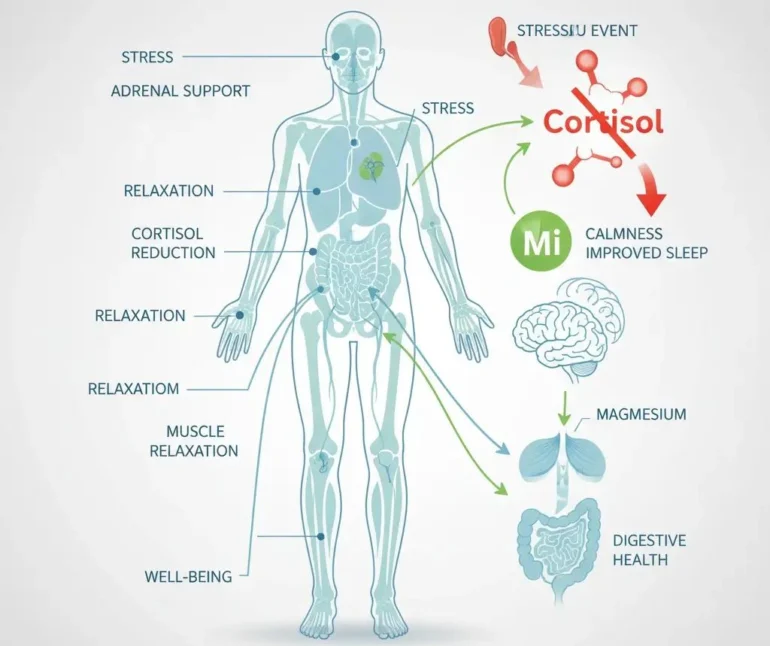
How Magnesium Supports Cortisol Balance
Cortisol acts as the body’s primary stress hormone. In short bursts, it helps you stay alert and responsive. However, when cortisol remains elevated for long periods, problems such as poor sleep, belly fat gain, and mood swings may appear.
Research suggests that magnesium and cortisol interact through several regulatory pathways. Magnesium helps modulate the hypothalamic-pituitary-adrenal (HPA) axis, which controls cortisol release. When magnesium levels remain adequate, the body often handles stress signals more efficiently.
In addition, magnesium supports deeper sleep, which naturally lowers nighttime cortisol. Because sleep and cortisol strongly influence each other, improving one often benefits the other. This explains why many people using magnesium for stress report feeling calmer within weeks of consistent use.
Effects on the Nervous System
Magnesium acts as a natural regulator of the nervous system. It helps control NMDA receptors and supports GABA activity, both of which influence how calm or stimulated you feel. When magnesium levels drop, the nervous system may become overly reactive.
Because of this mechanism, magnesium for stress often promotes a smoother transition into relaxation mode at night. Many users notice reduced muscle tension and fewer racing thoughts before bed. These effects support overall recovery.
Moreover, balanced magnesium and cortisol activity helps prevent the body from staying stuck in “fight or flight.” Over time, this may improve resilience to daily stressors.
Benefits for Mood and Relaxation
Mood stability depends heavily on proper mineral balance. Magnesium contributes to serotonin regulation and supports healthy brain signaling. Therefore, adequate intake often correlates with improved emotional stability.
Many people using magnesium for stress report feeling more emotionally steady and less overwhelmed. While magnesium is not a sedative, it helps the body relax naturally. This subtle support makes it useful for long-term wellness routines.
Additionally, better magnesium and cortisol balance may improve sleep quality. Since poor sleep worsens mood the next day, this creates a positive feedback loop that supports overall well-being.
Best Magnesium Supplement for Stress Support
Not all forms work equally well when choosing magnesium for stress. Absorption, tolerance, and calming properties vary significantly between types. Therefore, selecting the right form makes a noticeable difference.
Magnesium glycinate often ranks as the top choice for stress support. Its bond with glycine promotes relaxation and gentle absorption. Magnesium threonate may also support cognitive calm and brain health. Meanwhile, magnesium citrate works well for digestion but may feel too stimulating for nighttime use.
When evaluating products, look for clean labels and well-absorbed forms. A high-quality multi-form blend can sometimes provide broader benefits. To understand how to pick the best magnesium supplement, read the complete pillar guide:
Magnesium Supplement: Benefits, Types, and How to Choose the Best One
Conclusion
Using magnesium for stress offers a simple yet powerful way to support nervous system balance. By helping regulate the HPA axis, magnesium plays a meaningful role in controlling stress responses. In addition, the connection between magnesium and cortisol explains why many people feel calmer and sleep better after improving their intake.
Choosing the right form and maintaining consistent use matters most. With proper support, the best magnesium supplement can help your body handle daily pressure more efficiently and promote long-term wellness.
References
- National Institutes of Health – Magnesium Fact Sheet
https://ods.od.nih.gov/factsheets/Magnesium-HealthProfessional/ - PubMed – Magnesium and Stress
https://pubmed.ncbi.nlm.nih.gov/23853635/ - Sleep Foundation – Magnesium and Sleep
https://www.sleepfoundation.org/magnesium - Cleveland Clinic – Benefits of Magnesium
https://health.clevelandclinic.org/magnesium-benefits/
FAQs
1. Does magnesium really help with stress?
Yes. Many studies show magnesium supports nervous system regulation and may reduce stress symptoms.
2. How does magnesium affect cortisol?
Magnesium helps regulate the HPA axis, which controls cortisol release in the body.
3. Which magnesium form is best for stress?
Magnesium glycinate is often preferred due to its calming and well-tolerated profile.
4. How long does magnesium take to work for stress?
Some people notice changes within days, but consistent use for several weeks usually brings the best results.
5. Can I take magnesium every night?
Most healthy adults can take magnesium daily within recommended doses, but always follow label guidance.
Read More
Want to learn more about magnesium and its powerful benefits?
If you’re serious about improving your sleep, reducing stress, and optimizing your metabolism, don’t stop here. Explore our expert guides below to deepen your understanding and choose the best magnesium strategy for your goals.
Continue reading:
- Magnesium Supplement: Benefits, Types, and How to Choose the Best One
- 7 Types of Magnesium Explained: Which One Do You Need?
- Magnesium Glycinate vs Citrate: Which Is Better
- The Best Benefits of Magnesium for Sleep and Recovery