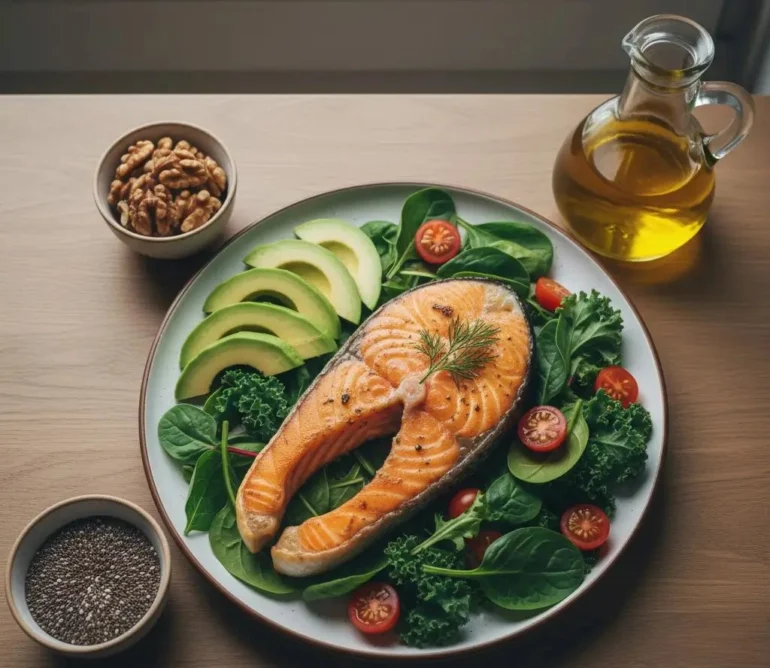
Healthy fats weight loss strategies have transformed the way experts approach sustainable fat reduction. For years, people feared dietary fat and avoided it completely. However, research now shows that the right fats support metabolism, stabilize hormones, and improve satiety. Instead of slowing progress, healthy fats can actively support fat burning when chosen wisely.
Many restrictive diets fail because they remove essential nutrients that regulate appetite and energy. A well-structured good fats diet provides long-lasting fuel and reduces cravings. Additionally, including omega-3 foods improves inflammation control and supports cellular health. These nutrients directly influence fat metabolism, helping the body use stored fat more efficiently.
When you understand which fats to include and which to limit, weight loss becomes more stable. Rather than eliminating fat, you focus on quality and balance. As a result, your meals become more satisfying, and your energy remains steady throughout the day.
To better understand how different foods work together for sustainable results, read our complete guide to safe weight loss nutrition strategy, where we explain the foundations of safe and natural weight loss.
Why Healthy Fats Help With Weight Loss
Many people still believe that eating fat automatically leads to weight gain. However, the body reacts differently depending on the type of fat consumed. When you include healthy fats strategically, you improve satiety and reduce overeating. As a result, calorie intake often balances naturally.
Healthy fats slow digestion and stabilize blood sugar levels. Because of this, energy remains steady throughout the day. Stable blood sugar also reduces cravings for refined carbohydrates. Consequently, weight management becomes easier and more predictable.
In addition, certain fats directly support fat metabolism. Omega-3 foods improve insulin sensitivity and reduce inflammation. A consistent good fats diet enhances metabolic flexibility. Therefore, healthy fats weight loss strategies support long-term success rather than short-term restriction.

Fats and Hormone Balance
Hormones control hunger, energy use, and fat storage. Therefore, dietary fat plays a central role in metabolic regulation. When fat intake is too low, hormone production may become disrupted. This imbalance often increases cravings and slows progress.
Healthy fats help regulate leptin and ghrelin, the hormones responsible for hunger signals. When these hormones function properly, appetite becomes easier to manage. In addition, balanced fat intake supports steady energy levels. This reduces emotional and stress-related eating.
Omega-3 foods further improve hormonal communication by lowering inflammation. Reduced inflammation improves insulin response and fat metabolism. As a result, the body uses stored fat more efficiently. A structured good fats diet strengthens this hormonal balance consistently.
Best Healthy Fats to Include in Your Diet
Choosing the right fat sources makes a significant difference. Whole-food fats provide nutrients that processed fats cannot offer. When you prioritize natural options, you support both heart health and fat metabolism. Therefore, quality always matters more than quantity.
Avocados, nuts, and seeds supply monounsaturated and polyunsaturated fats. These fats improve satiety and help regulate appetite. Additionally, they provide fiber and antioxidants. Together, these nutrients enhance healthy fats weight loss efforts.
Fatty fish stands out among omega-3 foods. Salmon, sardines, and mackerel reduce inflammation and support cellular repair. Including them regularly strengthens a balanced good fats diet. Over time, this consistency supports steady and sustainable fat loss.
Plant-Based Fats
Plant-based fats offer both metabolic and digestive benefits. For example, olive oil improves nutrient absorption and supports cardiovascular health. Meanwhile, nuts provide protein and fiber along with healthy fat. This combination promotes fullness and stability.
Chia seeds and flaxseeds rank among powerful omega-3 foods. They reduce inflammation and support gut health. Because digestion improves, fat metabolism becomes more efficient. Small daily additions create measurable benefits over time.
Moreover, plant fats increase meal satisfaction. When meals taste satisfying, adherence improves. This supports healthy fats weight loss without strict deprivation. Balance, not elimination, remains the key principle.
Natural Fat Sources
Natural animal-based fats can also support safe weight loss. Fatty fish remains one of the most beneficial sources available. Its omega-3 content reduces inflammation and improves insulin sensitivity. Therefore, it directly supports fat metabolism.
Egg yolks provide essential nutrients that assist hormone production. When consumed in moderation, they fit well within a good fats diet. They also enhance meal satisfaction and nutrient density. This improves dietary consistency.
Full-fat fermented dairy, such as Greek yogurt, may support digestive balance. When quality remains high, these options complement balanced meals. However, moderation remains important. Healthy fats weight loss depends on quality choices and structured portions.
Fats to Limit for Better Results
Not all fats support metabolic health. Some processed fats increase inflammation and disrupt hormone balance. Therefore, identifying harmful sources protects long-term results. Awareness allows smarter food decisions.
Trans fats present the greatest risk. They appear in many packaged snacks and fried foods. These fats interfere with fat metabolism and raise inflammatory markers. Consequently, they slow weight loss progress.
Highly refined vegetable oils may also cause imbalance when consumed excessively. They contribute to oxidative stress and inflammation. Replacing them with natural fats strengthens a good fats diet. Small adjustments improve healthy fats weight loss outcomes over time.
Nutrition works best when multiple healthy habits come together. While this article focused on one important category of foods, you can deepen your understanding by reading our full guide to safe weight loss nutrition strategy, where we explain how to combine these foods for consistent and sustainable weight loss.
Conclusion
Healthy fat intake supports sustainable and safe weight loss when chosen wisely. Instead of eliminating fat, focus on quality and balance. A well-designed good fats diet improves satiety, supports hormones, and enhances metabolic stability.
Including omega-3 foods reduces inflammation and strengthens cellular function. As inflammation decreases, fat metabolism improves. Consequently, the body uses stored energy more efficiently.
Moreover, healthy fats make meals satisfying. When meals satisfy you, consistency becomes easier. Therefore, adherence improves without extreme restriction.
At the same time, limiting trans fats and refined oils protects metabolic health. Strategic replacement creates a supportive nutrition pattern.
Ultimately, healthy fats weight loss succeeds when you combine quality fats with balanced meals and portion awareness. Rather than fearing fat, embrace the right sources. When used intentionally, healthy fats become powerful allies in long-term weight management.
References
Harvard Health — The truth about fats
American Heart Association — Healthy dietary fats
Mayo Clinic — Dietary fats explained
FAQs
1. Can healthy fats really help with weight loss?
Yes. They improve satiety, hormone balance, and fat metabolism.
2. How often should I eat omega-3 foods?
Include them at least two to three times per week.
3. Are all plant oils healthy?
No. Choose minimally processed oils like olive oil.
4. Should I avoid fat completely to lose weight?
No. Balanced fat intake supports sustainable results.
5. What fats should I avoid?
Limit trans fats and heavily refined vegetable oils.
Read More
- The Best Foods to Speed Up Weight Loss Safely
- 10 Daily Habits That Naturally Boost Your Metabolism
- The best anti-inflammatory foods for safe weight loss
This content is for educational purposes only and does not replace professional medical advice. Always consult a healthcare professional before starting any lifestyle changes, supplements, or dietary routines.